





Linocut Printmaking for Calligraphers with Sarah Bogdal & Schin Loong
Item #:
IAMPETH2026-Bogdal-Loong
Learn more at www.IAMEPTH.com/Conference
Please add the IAMPETH 2026 Supplies Pre-Order product to your order to let us know it's for conference pick up.
In this class, you will learn the basics of linocut printmaking. Printmaking is all about creating original artworks that can be reproduced by hand. You’ll hear a bit about the history of linocut and the difference between it and woodcut. We’ll compare different types of linoleum, you’ll get familiar with linocutters and blade sizes . . .
Linocut Printmaking for Calligraphers with Sarah Bogdal & Schin Loong
In this class, you will learn the basics of linocut printmaking. Printmaking is all about creating original artworks that can be reproduced by hand. You’ll hear a bit about the history of linocut and the difference between it and woodcut. We’ll compare different types of linoleum, you’ll get familiar with linocutters and blade sizes, and we’ll discuss important safety procedures. You will also learn about differences between water-based and oil-based inks and how paper choice affects your print. We’ll exercise carving techniques on a practice block to help you get comfortable with your tools before moving on to your final design. Students will then choose from several pre-made templates designed by Sarah Bogdal and Schin Loong, transfer their chosen design onto their linoleum block, carve their linoleum, and print their blocks. We’ll show you how to properly ink your block so you get a clean, crisp print. We’ll start by printing by hand using a baren, then we’ll move on to using the press. We’ll troubleshoot some common issues, like plate shifting, over-inking, or under-inking. You will leave the class with your carved block, 3 prints, and resourceful materials distributed in the class for ongoing reference. No printmaking experience is necessary.
Class Supply List
-
Unmounted standard linoleum block, 5” x 7” (for practice)*
-
Unmounted standard linoleum block, 6” x 8” (for finished work)*
-
Speedball linocutter handle*
-
Speedball linocutter blade set*
-
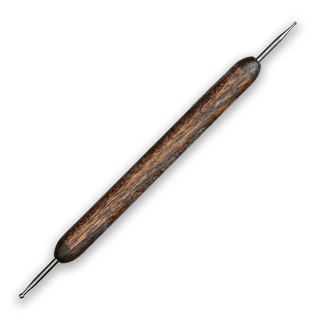
Double-ended stylus*
-
One sheet graphite transfer paper; 8” x 10”*
-
Anti-slip mat (such as cabinet liner)*
-
3 of BFK Rives cut down to 7” x 9”*
-
HB pencil
-
Eraser
-
Black Micron (size 05, 08, or 10)
-
Fine-point black Sharpie
-
*Supplies marked with an asterisk will be built into a kit available for purchase from Paper & Ink Arts or John Neal Books.
Optional Supply List
-
Speedball bench hook/inking plate (I will have these available in class for students to try, but you may bring your own if you prefer)
-
Speedball baren or wooden spoon (also available for use in class, though you may bring your own)
-
Speedball 6” soft rubber brayer (I will bring brayers for shared use, but you may bring your own)
-
Small tube of Speedball Professional Relief Ink in black (I will have additional jars available to share)
-
Higher-quality fixed handle carving tools such as Pfiel or Flexcut (very optional; if bringing Pfiel tools, recommended sizes include 11/1 for small details, 11/3 as a medium U-gouge, and 9/5 or 7/10 for larger U-gouges for removing more material).
Class Supplies:
-
-
On Sale

Saral Transfer Paper
$17.95$17.25
-
On Sale
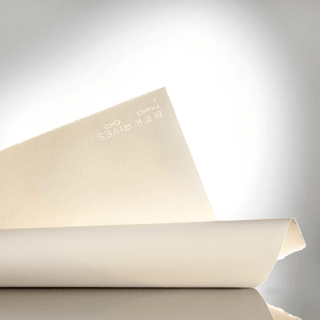
Rives BFK Paper, 180 gsm, 19.5" x 25.5"
$6.29$5.80 -
On Sale

Faber-Castell 9000 Series Drawing Pencil
$2.00$1.80 -

-
On Sale

Sakura Pigma Micron 05 / .45 mm
$3.33$2.65 -
On Sale
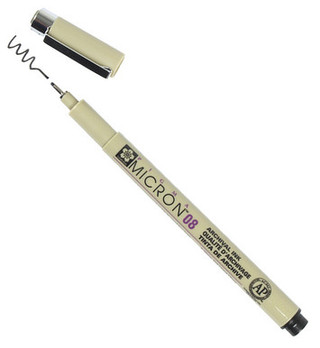
Sakura Pigma Micron 08 / .50 mm
$3.33$2.65 -
On Sale
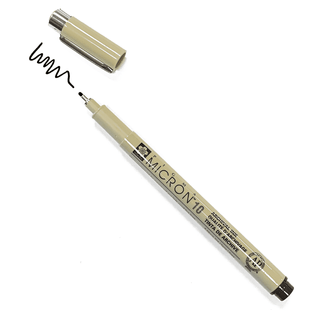
Sakura Pigma Micron 10 / .60 mm
$3.33$2.65
-
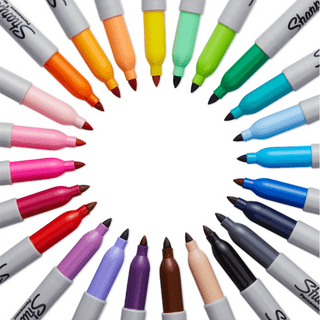
Sharpie Fine Point
$1.29 -
On Sale
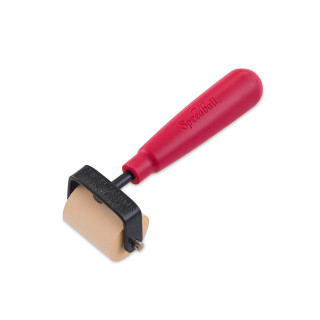
Speedball Deluxe Soft Rubber Brayer, 1.5"
$19.42$15.73 -
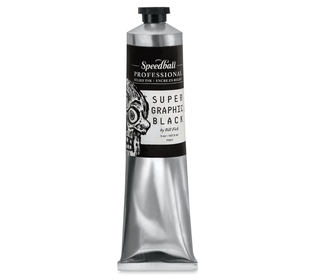
Linocut Printmaking for Calligraphers with Sarah Bogdal & Schin Loong
In this class, you will learn the basics of linocut printmaking. Printmaking is all about creating original artworks that can be reproduced by hand. You’ll hear a bit about the history of linocut and the difference between it and woodcut. We’ll compare different types of linoleum, you’ll get familiar with linocutters and blade sizes, and we’ll discuss important safety procedures. You will also learn about differences between water-based and oil-based inks and how paper choice affects your print. We’ll exercise carving techniques on a practice block to help you get comfortable with your tools before moving on to your final design. Students will then choose from several pre-made templates designed by Sarah Bogdal and Schin Loong, transfer their chosen design onto their linoleum block, carve their linoleum, and print their blocks. We’ll show you how to properly ink your block so you get a clean, crisp print. We’ll start by printing by hand using a baren, then we’ll move on to using the press. We’ll troubleshoot some common issues, like plate shifting, over-inking, or under-inking. You will leave the class with your carved block, 3 prints, and resourceful materials distributed in the class for ongoing reference. No printmaking experience is necessary.
Class Supply List
-
Unmounted standard linoleum block, 5” x 7” (for practice)*
-
Unmounted standard linoleum block, 6” x 8” (for finished work)*
-
Speedball linocutter handle*
-
Speedball linocutter blade set*
-
Double-ended stylus*
-
One sheet graphite transfer paper; 8” x 10”*
-
Anti-slip mat (such as cabinet liner)*
-
3 of BFK Rives cut down to 7” x 9”*
-
HB pencil
-
Eraser
-
Black Micron (size 05, 08, or 10)
-
Fine-point black Sharpie
-
*Supplies marked with an asterisk will be built into a kit available for purchase from Paper & Ink Arts or John Neal Books.
Optional Supply List
-
Speedball bench hook/inking plate (I will have these available in class for students to try, but you may bring your own if you prefer)
-
Speedball baren or wooden spoon (also available for use in class, though you may bring your own)
-
Speedball 6” soft rubber brayer (I will bring brayers for shared use, but you may bring your own)
-
Small tube of Speedball Professional Relief Ink in black (I will have additional jars available to share)
-
Higher-quality fixed handle carving tools such as Pfiel or Flexcut (very optional; if bringing Pfiel tools, recommended sizes include 11/1 for small details, 11/3 as a medium U-gouge, and 9/5 or 7/10 for larger U-gouges for removing more material).


You Save 15%

You Save 22%

You Save 15%


